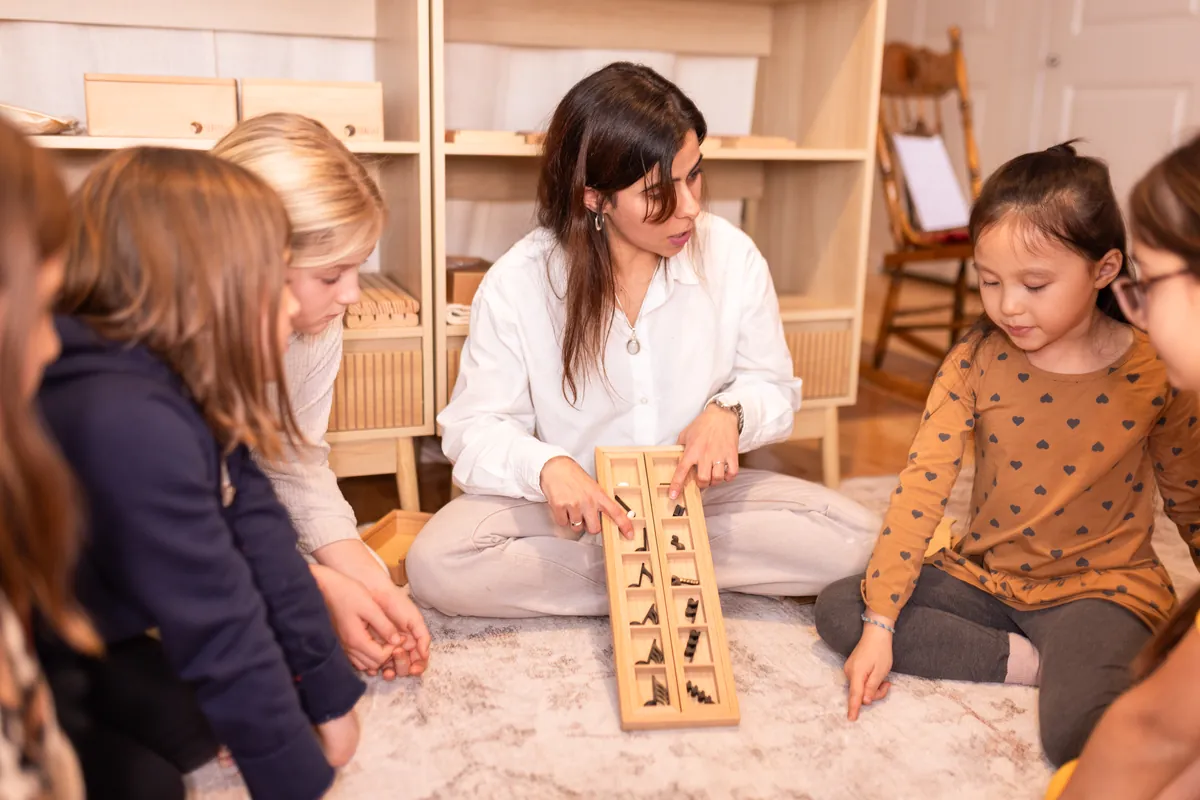
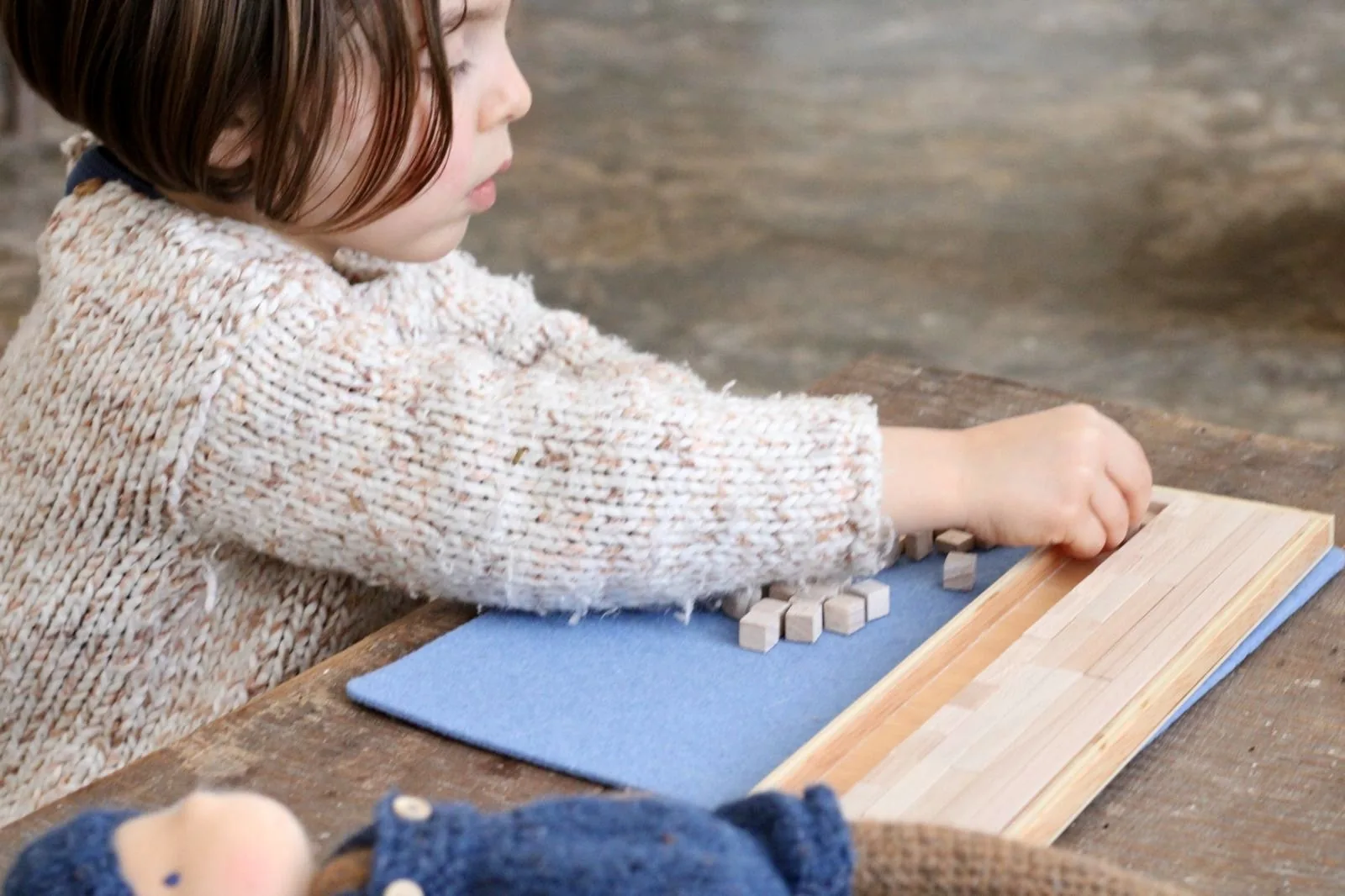
Each axis is a gateway into music — through the senses, before the symbols.
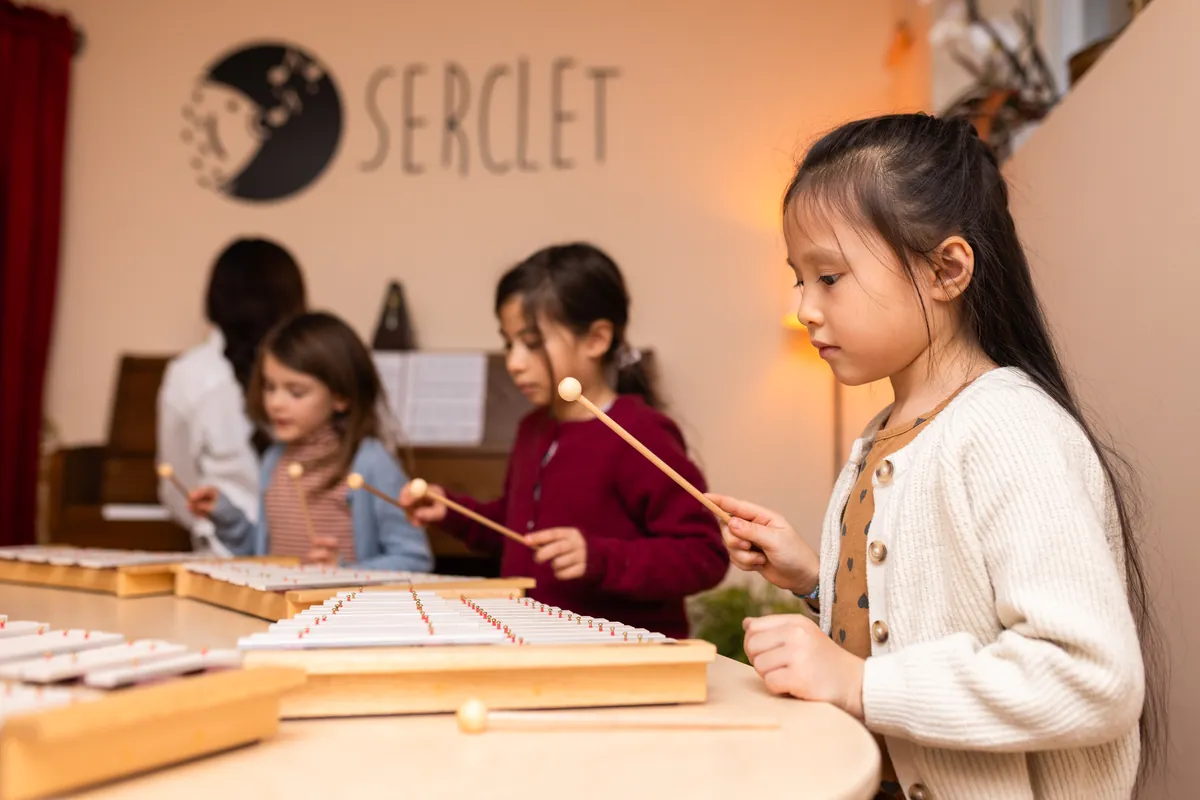
Before making a sound, the child learns to listen to one. Mysterious sound boxes, varied textures, instruments discovered with eyes closed — each session begins with a sensory bath that awakens auditory attention in a natural, joyful way.
→ The child's brain learns to discriminate sounds before even naming them.
Music has a grammar — duration, pitch, intensity, timbre. Children manipulate wooden rhythm figures, compare them, sort them. They 'read' music with their hands before doing so with their eyes, building a solid mental representation of the musical language.
→ Musical notation becomes intuitive because it was first experienced concretely.
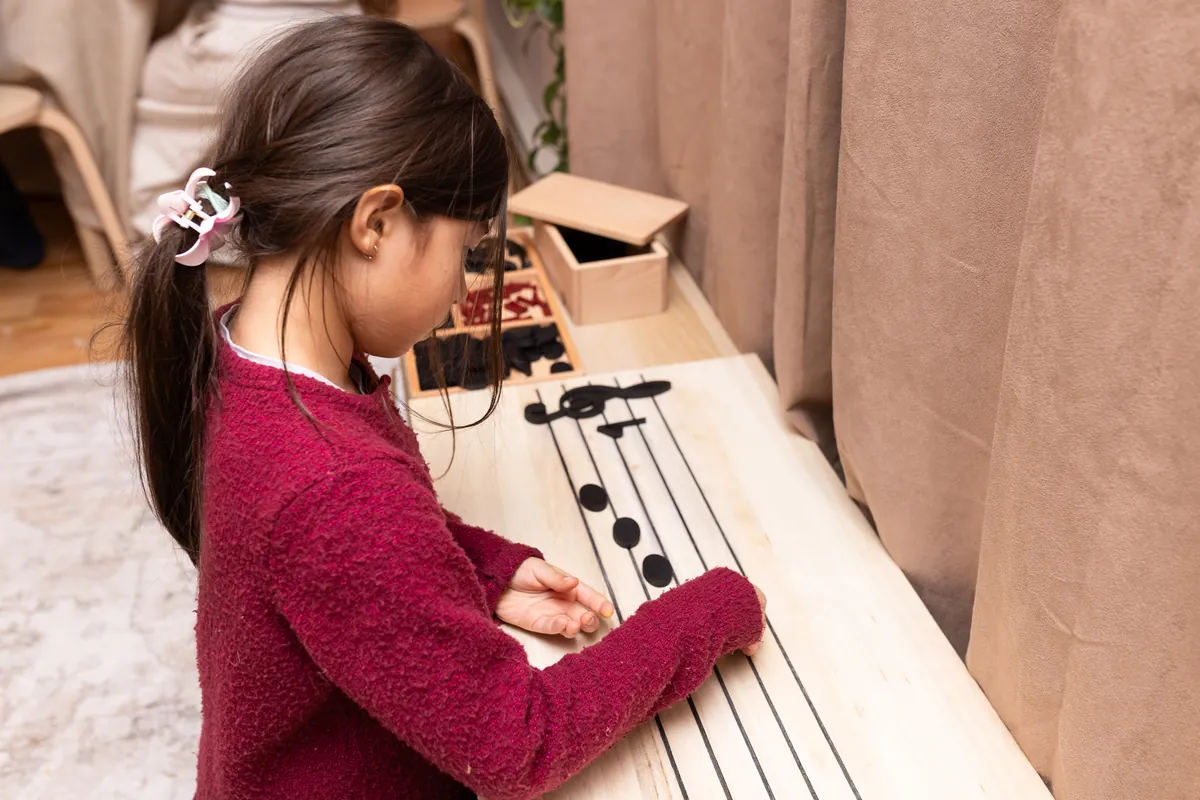
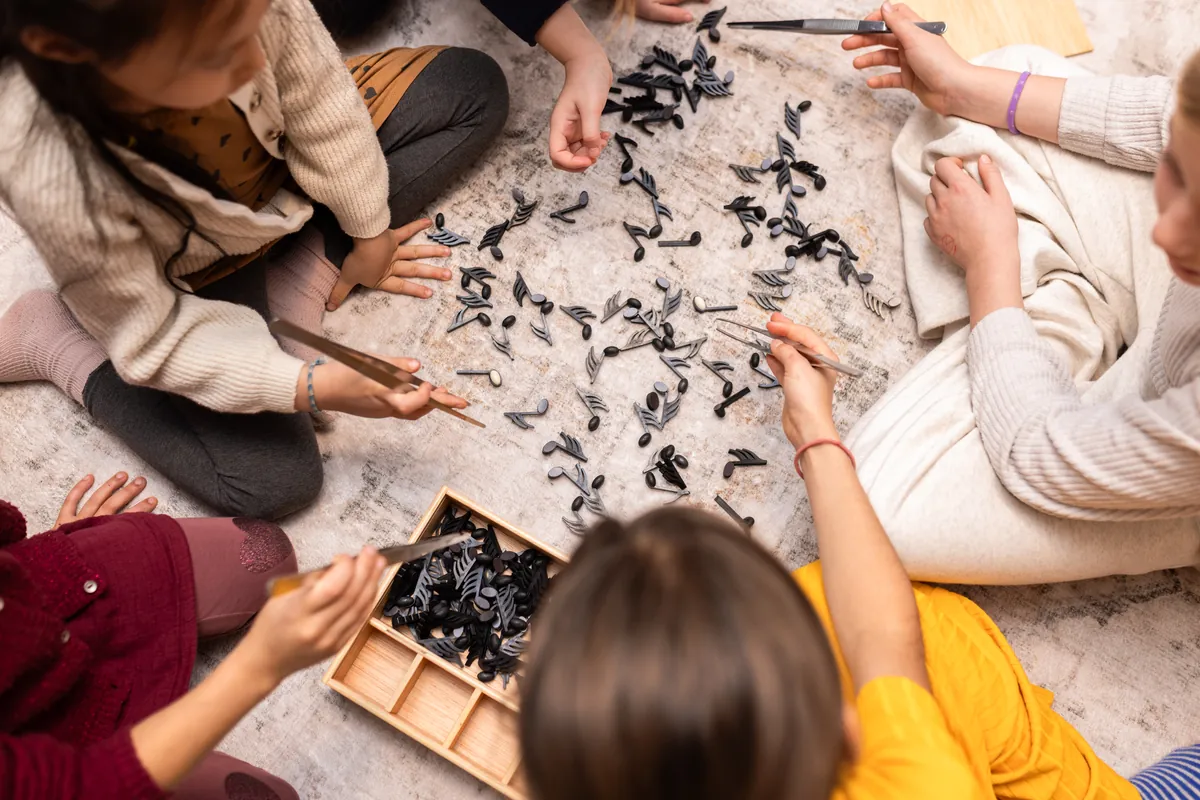
Long or short? Low or high? Loud or soft? The child organizes musical elements by contrasting pairs, classifies them by their properties, and relates them to one another. These structuring activities simultaneously develop musical ear and cognitive categorization skills — a unique double benefit of the Serclet method.
→ Musical thinking is built through comparison, not memorization.
Once elements are integrated, the child uses them to express themselves. They improvise, compose, interpret with their body and the instruments available. Musical understanding becomes creative action — the child is no longer a receiver, but the author of their own music.
→ Creating freely is the sign that understanding is truly integrated.
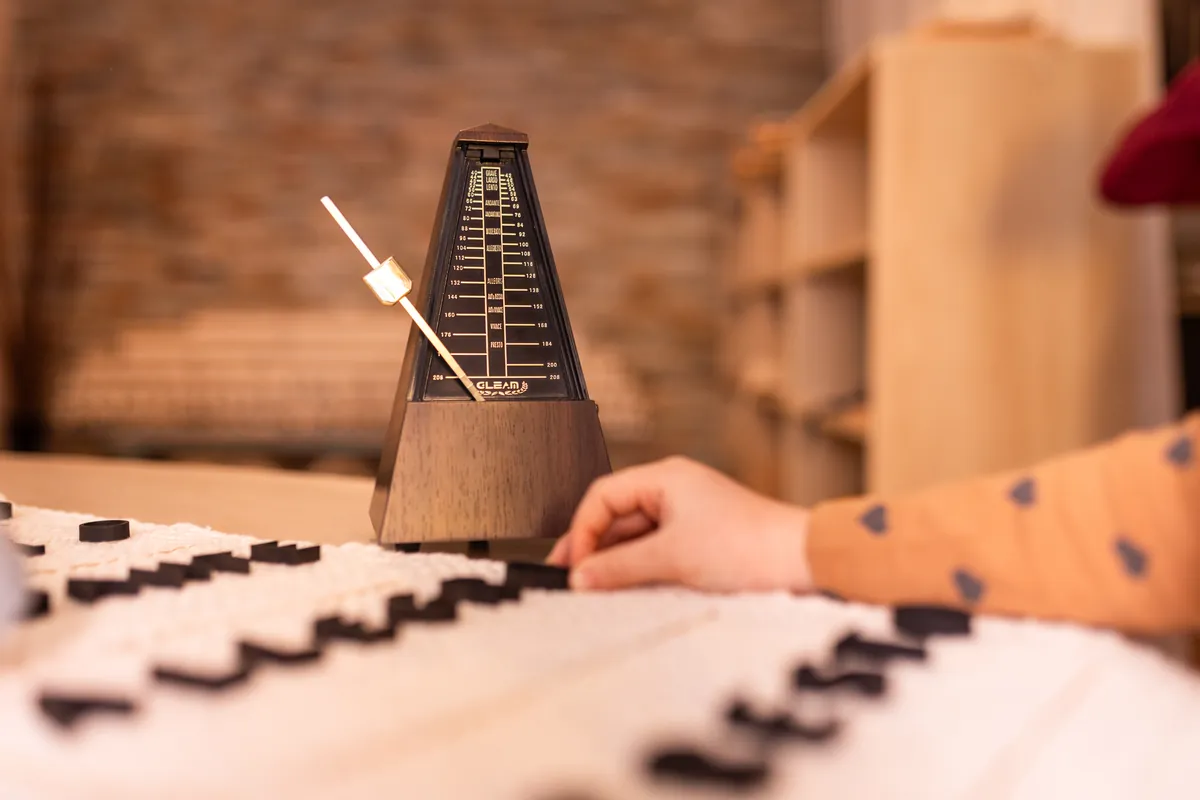
Not for the rushed parent — for the child who has time to discover.
Explore available programs or book a free trial session — no commitment, just curiosity.
In Québec and across Francophone Canada · Response within 24h